

Running a WordPress website has never been more challenging from a security perspective. What used to be a manageable maintenance task has turned into a high-stakes race against sophisticated attackers who move at lightning speed. According to the latest Patchstack State of WordPress Security insights in the 2026 white paper, the threat landscape has intensified significantly. Hackers are exploiting vulnerabilities much faster, premium plugins aren’t as safe as many assume, and traditional defenses are falling short.
This article breaks down the key findings from Patchstack’s research (as covered by Search Engine Journal) and provides actionable steps you can take to strengthen your site’s defenses in 2026.
Security Has Become a Race Against Time
The most alarming shift is how quickly attackers strike after a vulnerability is disclosed.
Patchstack’s analysis reveals:
- Approximately 50% of high-impact vulnerabilities are exploited within 24 hours of public disclosure.
- When weighted by exploitation intensity, the median time to first attack drops to just 5 hours.
This compression of the “safe window” destroys the old strategy of “I’ll update during the weekend.” For heavily targeted flaws, you may have only a few hours before automated bots start scanning and attacking your site.
A reliable security plugin with smart habits and quick response strategies, you can significantly reduce your risk of being hacked.
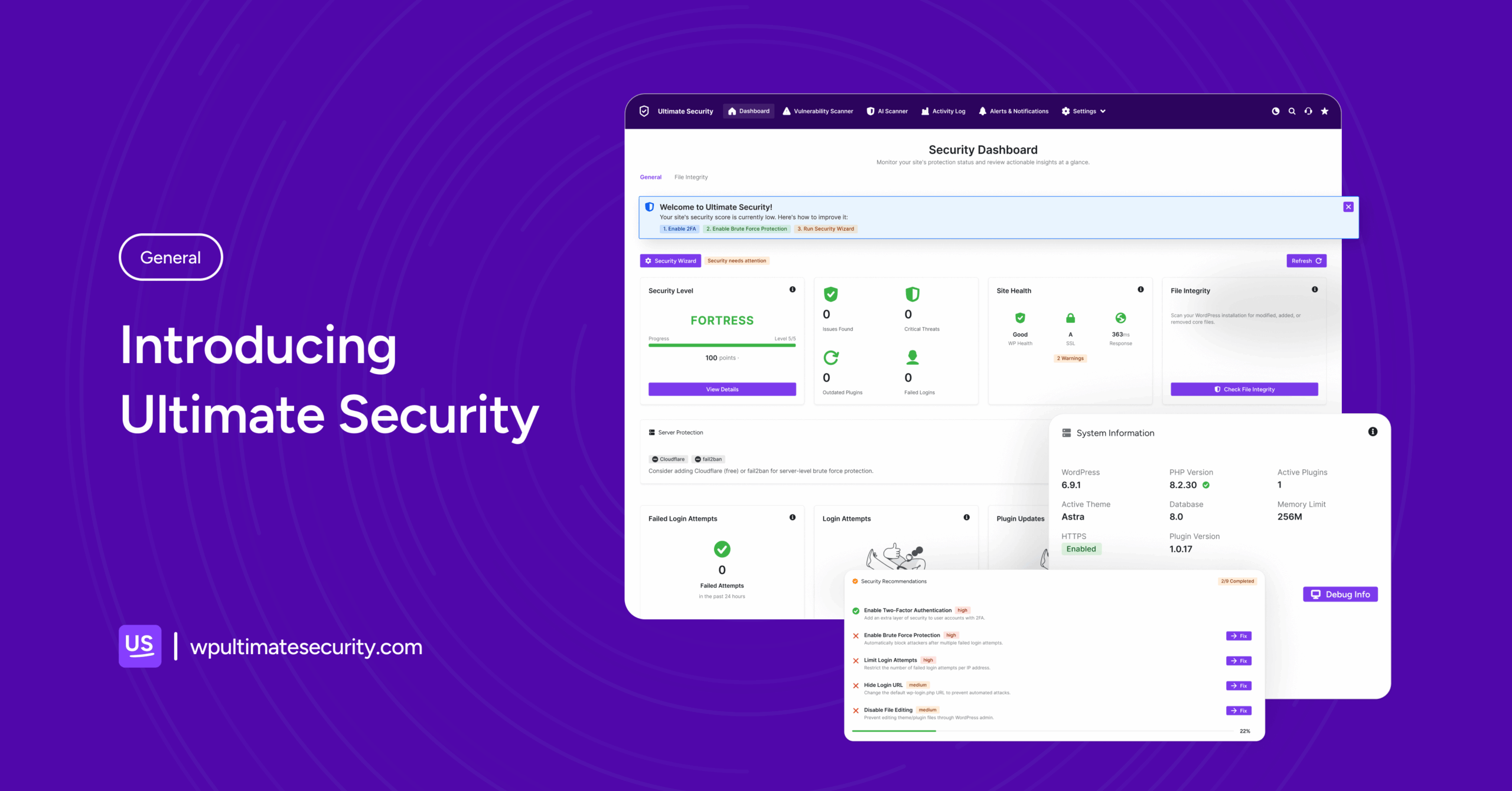
Ultimate Security is a powerful, lightweight WordPress security solution that provides automatic vulnerability scans, real-time protection, login security, 2FA, brute-force prevention, and much more to keep your site safe.
Why is this happening?
Attackers use sophisticated tools that automatically weaponize new vulnerabilities as soon as proof-of-concept code appears on forums or dark web channels. Mass exploitation campaigns can hit thousands of sites simultaneously.
What you should do immediately:
- Set up real-time notifications for critical vulnerabilities
- Create an emergency patching protocol for anything rated High or Critical.
- Consider automated update tools for non-breaking changes (with proper staging/testing first).
Vulnerability Volume Hit Record Levels in 2025
The sheer number of security issues discovered last year is concerning:
- 11,334 new vulnerabilities were found in the WordPress ecosystem in 2025, a 42% increase from 2024.
- 4,124 (36%) were serious enough to require immediate virtual patches or mitigation.
- 1,966 (17%) were high-severity and prime targets for automated mass attacks.
Notably, the number of high-severity vulnerabilities in 2025 alone exceeded the total from the previous two years combined. The vast majority (91%) were in plugins, with only 9% in themes and a tiny 6 in the WordPress core.
This explosion is driven by the massive ecosystem of thousands of independent developers maintaining plugins and themes used by millions of sites.
Patch Delays Leave Sites Dangerously Exposed
Even after a vulnerability is known, fixes don’t always arrive quickly. Developers failed to provide timely patches for 46% of reported vulnerabilities.
This creates a risky period where the issue is public, attackers are actively scanning, but no official fix exists yet. In such cases, virtual patches (from security plugins) become essential.
Hosting Provider Firewalls Are Not Enough
Many website owners trust their hosting company’s built-in Web Application Firewall (WAF) for protection. Patchstack’s large-scale testing across popular hosts delivered disappointing results:
- Hosting WAFs blocked only 26% of WordPress-specific vulnerability attacks.
This means roughly 74% of attacks can bypass standard hosting defenses. Relying solely on your host is no longer sufficient.
Better approach:
- Layer multiple defenses: hosting WAF + dedicated WordPress security plugin (with virtual patching).
- Use a Content Delivery Network (CDN) with strong security features (Cloudflare).
- Monitor your site’s security logs regularly.
Old Vulnerabilities Continue to Haunt Sites
Attackers don’t just chase shiny new flaws. Patchstack found that in the top 10 most exploited vulnerabilities, only 4 were from 2025, the rest were older issues.
Commonly targeted outdated plugins include versions of:
- LiteSpeed Cache
- tagDiv Composer
- GiveWP
- WooCommerce Payments
- Startklar Elementor Addons
This highlights a critical point: Abandoned or rarely updated plugins create long-term security debt.
Action steps:
- Audit your entire plugin list quarterly.
- Delete anything unused or unmaintained.
- Enable automatic updates for low-risk plugins where possible.
- Replace outdated solutions with actively supported alternatives.
Post-Compromise Behavior Is Becoming More Persistent
Once attackers gain access, they’re no longer just dropping quick malware and leaving. They’re building persistent infrastructure:
- Uploading backdoor files disguised as legitimate code.
- Using multi-stage attacks for long-term access.
- Hiding in legitimate files or using advanced evasion techniques.
Cleanup has become significantly harder. Simple file deletion often isn’t enough anymore.
The Expanding Attack Surface in Modern WordPress Sites
Traditional plugin and theme updates cover only part of the risk today. The attack surface now includes:
- Custom-coded functionality
- Third-party JavaScript and PHP libraries (NPM, Composer dependencies)
- AI-generated code
- Headless setups and API integrations
None of these updates is automatically applied through the WordPress dashboard, creating blind spots.
Your 2026 WordPress Security Action Plan
Here’s a strong, actionable defense strategy you can implement right away to protect your site in this high-threat environment:
- Install a dedicated security plugin like Ultimate Security. It offers excellent login protection, two-factor authentication (2FA), anti-spam CAPTCHA, brute-force prevention, bad bot protection, and a clean security dashboard, all while remaining lightweight and privacy-focused.
- Enable real-time vulnerability monitoring and alerts .
- Strengthen login security further with features like custom login URLs, strong password enforcement, and login attempt limiting.
- Maintain daily off-site backups with easy one-click restore capability.
Start with Ultimate Security as your foundation because it directly addresses the most common attack vectors in 2026, brute force attacks, unauthorized logins, and bot activity, while keeping your site fast and privacy-friendly.
Key Statistics Summary (2025 Data)
| Metric | Figure | Implication |
|---|---|---|
| Total New Vulnerabilities | 11,334 (+42%) | Record year |
| High-Severity Vulnerabilities | 1,966 | More than prior 2 years combined |
| Median Time to First Exploit | 5 hours | Extremely fast attacks |
| Developer Patch Delay | 46% | Frequent exposure windows |
| Hosting WAF Block Rate | 26% | Layered defense needed |
Primary Source: Patchstack State of WordPress Security in 2026
Final Thoughts
WordPress continues to power a huge portion of the internet, which makes it an attractive target. The data from 2025 clearly shows that passive security habits are no longer viable. The most successful site owners in 2026 will treat security as an ongoing business process rather than an occasional chore.
By staying informed, acting quickly on critical updates, and layering multiple protections, you can significantly reduce your risk even in this faster-moving threat environment.
This article provides analysis and actionable advice based on the Patchstack State of WordPress Security in 2026 whitepaper and the original reporting by Search Engine Journal. All statistics are attributed to Patchstack.



Comments are moderated. Stay on topic: spam and link drops are removed.